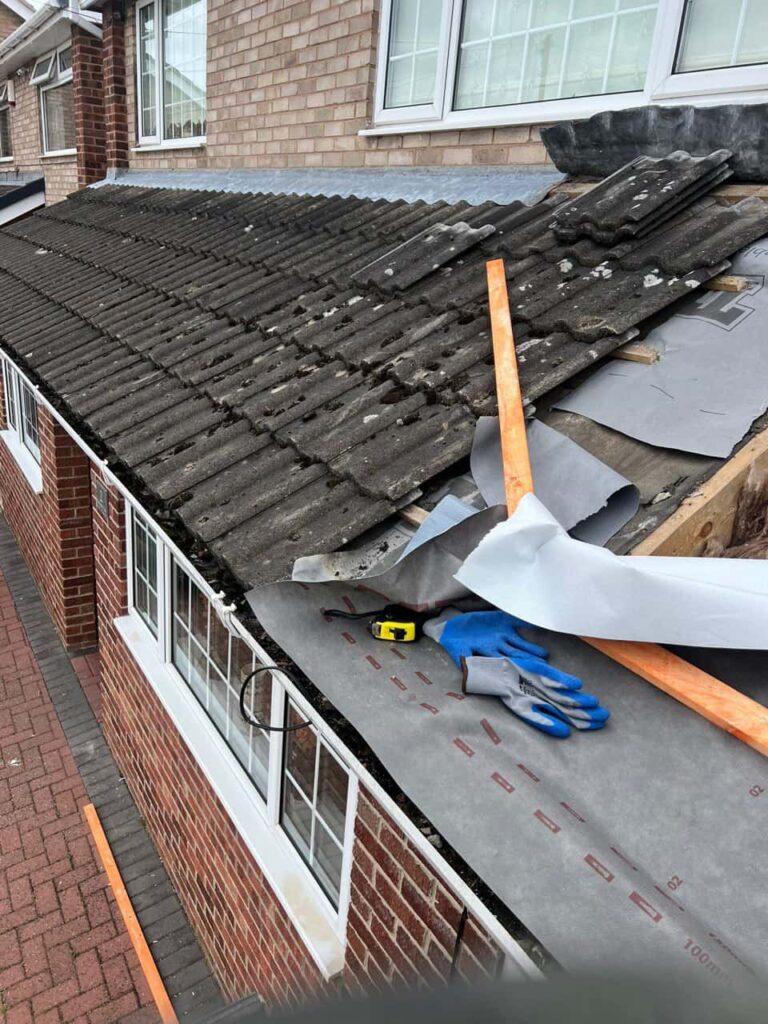
A slipped roof tile can appear to be a minor defect, particularly when no water is entering the property. However, tiles form part of an overlapping system designed to direct rainwater safely down the roof. When one moves out of position, it can expose the materials beneath and affect the stability of neighbouring tiles.
For property owners in Tuxford, Nottinghamshire, arranging an early inspection can establish why the tile moved and whether the surrounding roof remains secure. A straightforward repair may be possible when the problem is addressed before moisture or further movement affects a wider area.
Why a Slipped Roof Tile Needs Professional Attention
A displaced tile should not simply be pushed back into position without investigating its fixings and support. The tile may have moved because a fixing has failed, a timber batten has deteriorated or the surrounding materials have shifted.
Identifying the cause is important because replacing the visible tile alone may not prevent the same problem from happening again.
The Underlay May Be Exposed
Roof tiles provide the primary protection against rainfall. Beneath them, the underlay forms a secondary barrier, but it is not intended to remain exposed for long periods.
A gap created by a slipped tile can allow rain, wind-driven moisture and debris to reach the underlay directly. If the membrane is torn, brittle or poorly supported, water may pass into the roof space.
Even when the ceiling below remains dry, the exposed area should be checked before weathering causes further deterioration.
Water Can Travel Away From the Opening
A roof leak does not always appear directly beneath a displaced tile. Water may run down the underlay, follow a rafter or collect around another roof detail before becoming visible indoors.
This means a small ceiling stain elsewhere in the property could still be connected to the slipped tile. Moisture may also remain hidden within insulation or timber for some time.
A professional inspection considers the likely route of the water rather than assessing only the internal symptom.
Surrounding Tiles May Be Affected
Tiles support and overlap one another. When one slips, the edges of adjacent tiles may become more exposed to wind, rain and movement.
A displaced tile can sometimes indicate that nearby fixings or battens are also deteriorating. This is especially relevant when several tiles have shifted within the same section of the roof.
Checking the surrounding area helps determine whether the problem is genuinely isolated or part of a developing pattern.
A Failed Fixing May Be the Cause
Roof tiles are secured using nails, clips, nibs or a combination of fixing methods. These components can corrode, loosen or fail over time.
A tile can also slip when its nibs break, even if the main body of the tile remains intact. Reusing a damaged tile without suitable support may therefore provide only a temporary solution.
The correct repair depends on the roof covering and the condition of the original fixing point.
Battens Can Deteriorate Beneath the Tiles
Tiles are supported by horizontal timber battens. If moisture has reached these timbers repeatedly, they may soften, decay or lose their ability to hold fixings securely.
A deteriorated batten can allow more than one tile to move. Simply replacing the first visible tile may leave the underlying weakness unresolved.
The affected section may need to be opened carefully so that the batten and underlay can be assessed before the tiles are reinstated.
Wind Can Worsen the Opening
A tile that has already moved may be more vulnerable during windy conditions. Air can reach beneath the exposed edges and place additional pressure on the displaced tile or those around it.
This does not mean that one slipped tile will automatically cause widespread roof damage. It does mean that the exposed section should be secured before further movement has an opportunity to occur.
Prompt attention is particularly sensible if the tile appears loose rather than simply out of alignment.
The Tile Could Fall From the Roof
A severely displaced tile may slide further down the roof or become detached. The likelihood depends on its position, fixing and the pitch of the roof.
Avoid standing beneath a visibly loose tile or attempting to retrieve it from a ladder. The roof covering may be unstable, and movement around the affected area could dislodge it further.
A roofing contractor can assess the tile using suitable access methods and secure the area safely.
Signs That the Problem May Be More Extensive
One slipped tile is often repairable, but wider investigation may be needed if you notice:
- several displaced tiles
- uneven rows of roofing materials
- recurring movement in the same area
- crumbling or decayed battens
- torn or sagging underlay
- dampness inside the roof space
- daylight visible through the covering
- previous repairs beginning to fail
These signs may indicate that the roof section has a broader fixing, support or moisture problem.
What a Professional Inspection Should Establish
A useful roof inspection should identify more than the location of the displaced tile. It should examine:
- whether the tile can be reused or needs replacing
- the condition of its fixings
- the strength of the supporting batten
- the state of the underlay
- the alignment of nearby tiles
- any evidence of water ingress
- whether similar defects are developing elsewhere
This allows the repair to address the reason for the movement rather than only restoring the roof’s appearance.
Conclusion
A slipped tile should be checked because it can expose the roof underlay, allow moisture to enter and place neighbouring tiles under additional pressure. The problem may be caused by a failed fixing, broken tile nib or deteriorated batten rather than by the tile itself.
Early inspection often allows an isolated defect to be repaired before it affects a larger part of the roof. The absence of a visible leak does not necessarily mean that the exposed area is watertight.
If you have spotted a slipped tile at your property in Tuxford, Nottinghamshire, Tuxford Roofing Repairs can inspect the affected section and recommend a proportionate repair. Contact our team to arrange a professional assessment of the tile and surrounding roof materials.
Call us on: 01777 808 799
Click here to find out more about Tuxford Roofing Repairs
Click here to complete our contact form and see how we can help with your roofing needs.